Hot by Design: 5 Saunas That Combine Architecture and Wellness
A sauna can blend into the living space as a piece of furniture, almost disappear behind glass, or become a standalone architectural project outdoors. The following ten saunas show just how many different ways warmth can look. And what becomes possible when design, craftsmanship, and architecture come together.
1. The Sauna That Blends Into the Room
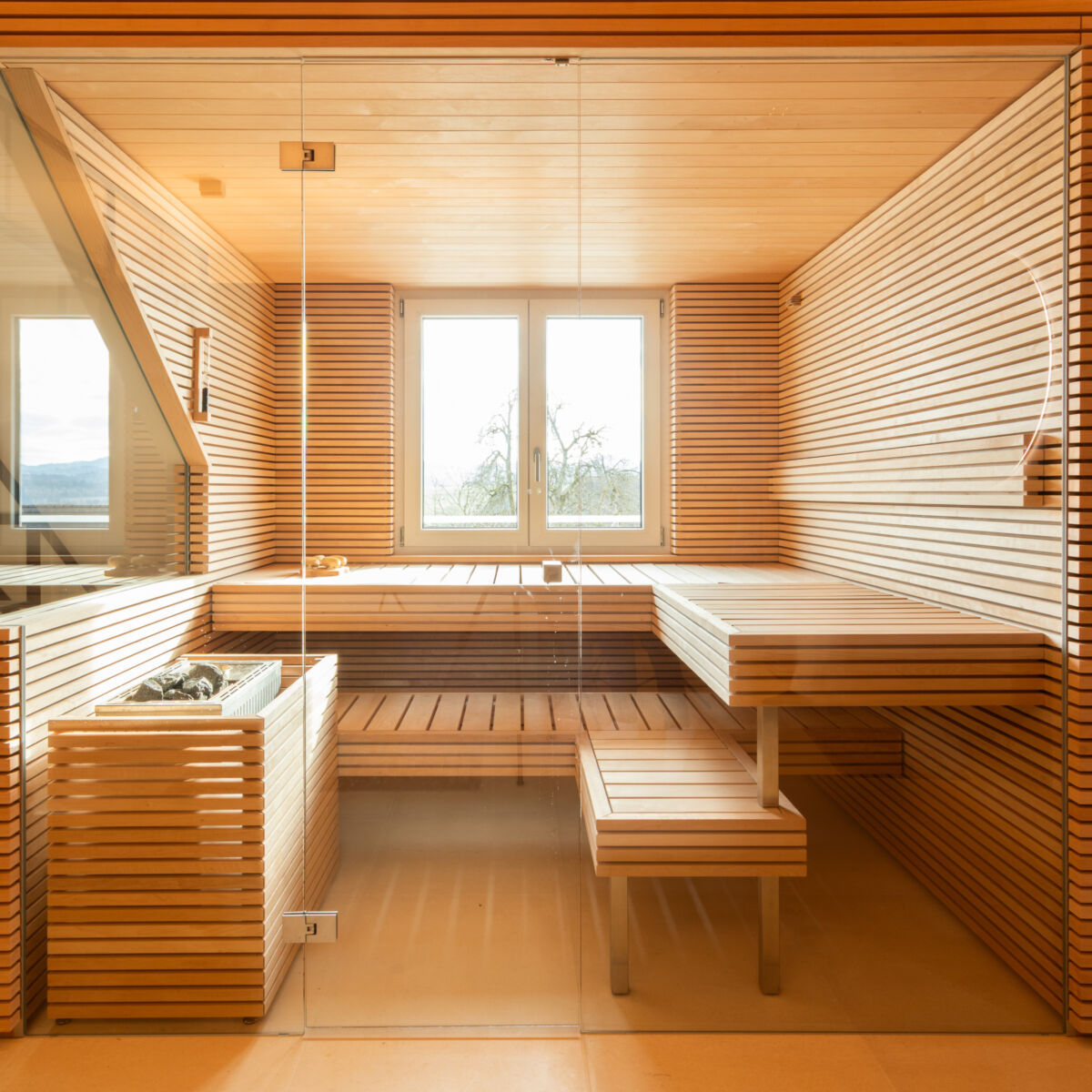
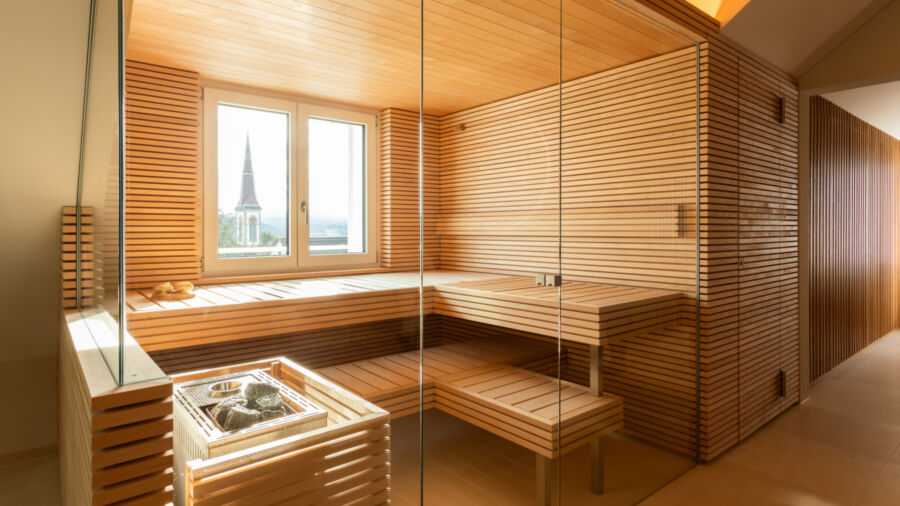
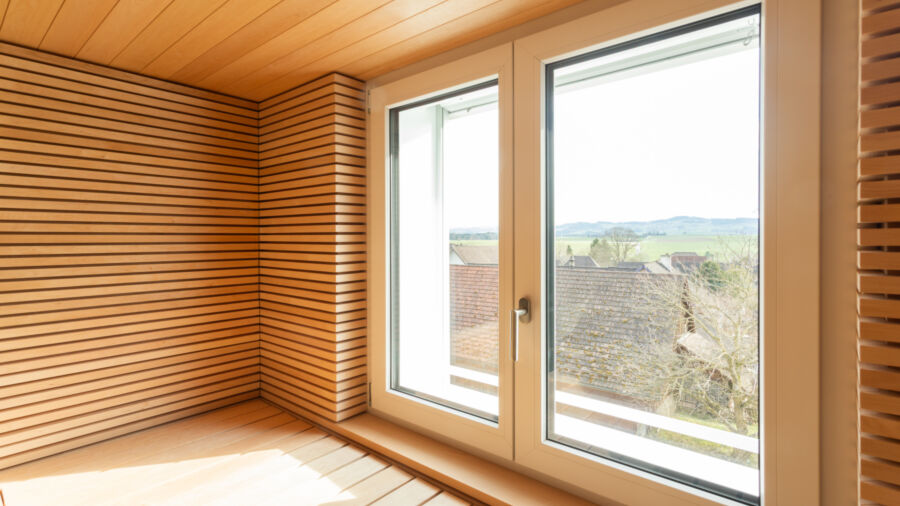
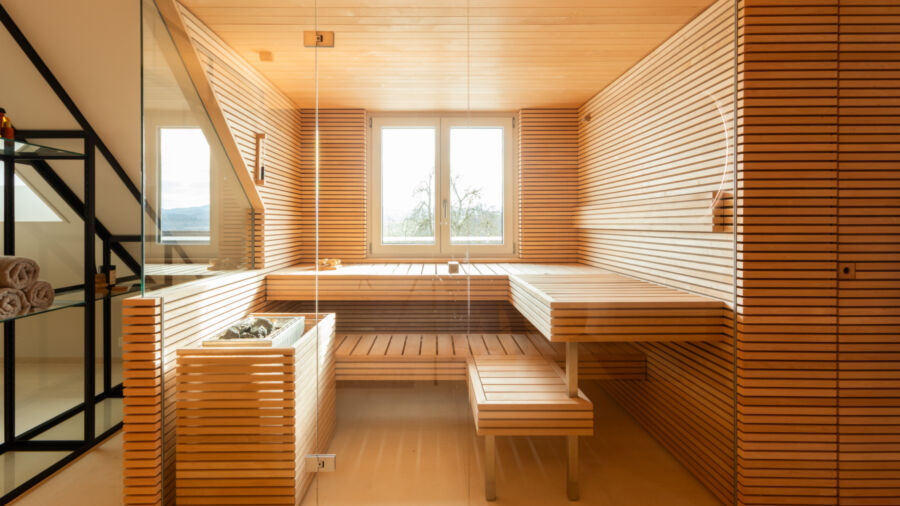
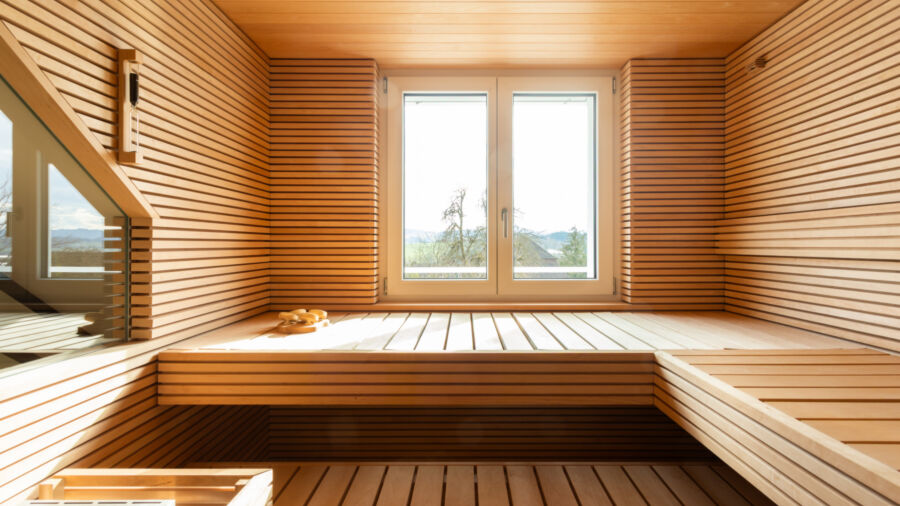
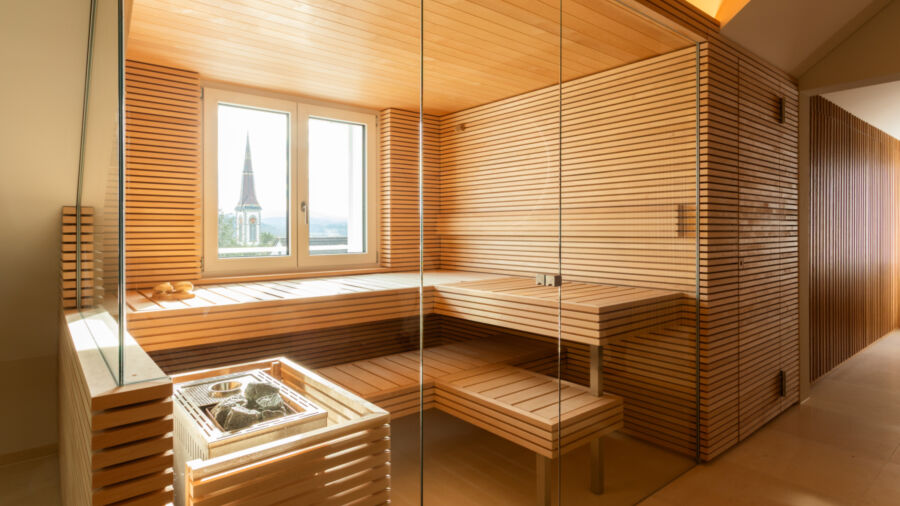
This sauna wasn’t simply placed under the roof. It became an integral part of the architecture. Custom-built, it fits precisely into the niche of the open-concept apartment and incorporates even the sloping roof and the existing window into its design.
Light-colored alder wood, consistent materials, and generous glass surfaces connect the sauna to the adjacent living, bathroom, and relaxation areas. Clean lines, our patented slat design, and discreetly integrated technology create a serene overall look. As a result, the sauna doesn’t feel like a separate cabin, but rather like a space that was intended to be there from the very beginning. Discover the entire project: A Sauna Under the Roof
2. Those with a broad perspective
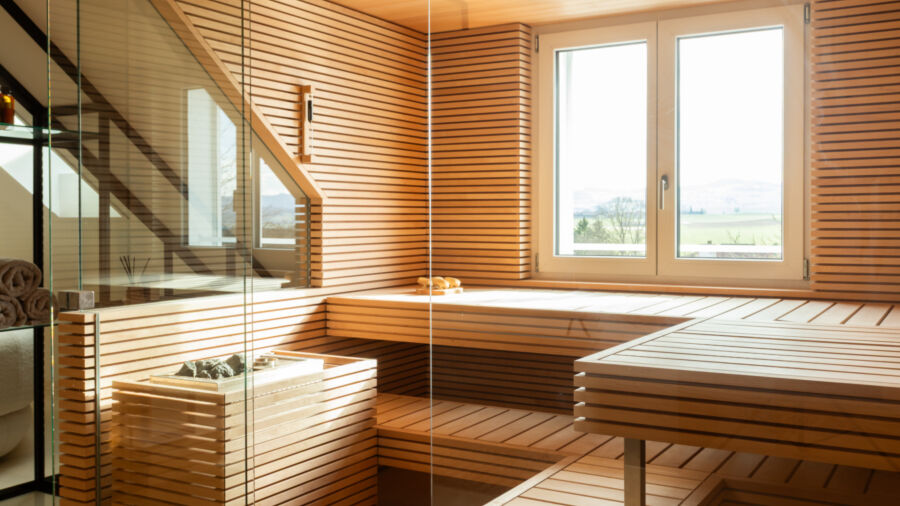
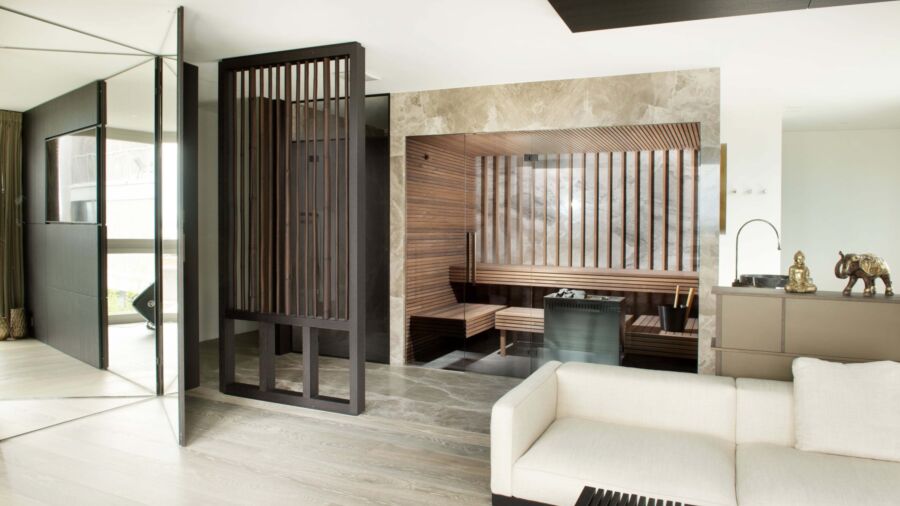
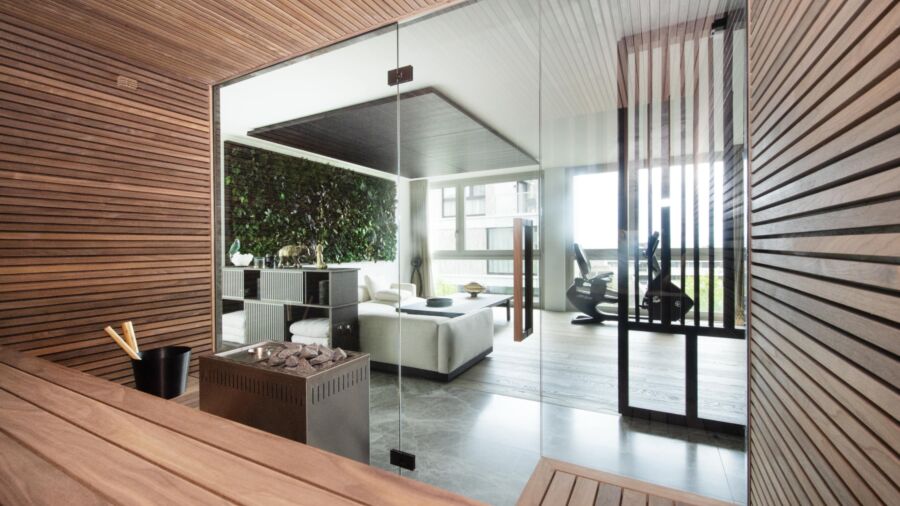
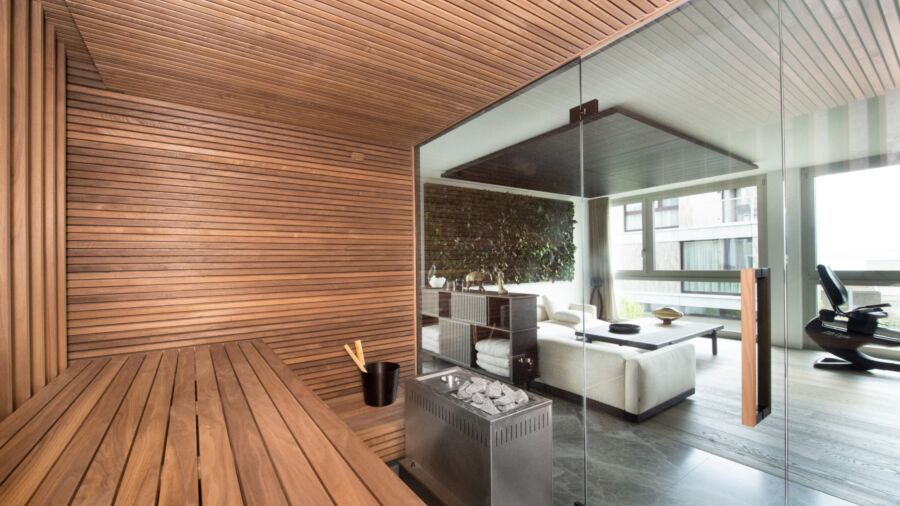
Generous glass surfaces have brought the sauna out of its seclusion. They open up the view to the outdoors, make small cabins appear more spacious, and reveal the carefully designed interior from the outside as well.
Glass makes a particularly strong impression when the sauna incorporates a view. Then the view of the garden, the mountains, or the city becomes part of the sauna experience. The architecture takes a back seat—allowing the surroundings to take center stage. Discover the entire project: A spa with the feel of a suite
3. The One with the Rough Edges
Not every room has right angles. Sloped ceilings, alcoves, columns, or unusual floor plans can make the planning process more challenging—while also leading to uniquely personalized solutions.
A custom-built sauna adapts precisely to these conditions. It follows the roofline, makes use of previously wasted corners, or incorporates existing axes. What initially appears to be a limitation thus becomes a distinctive design feature. Discover the entire project: Discover the entire project: The Spa Sculpture
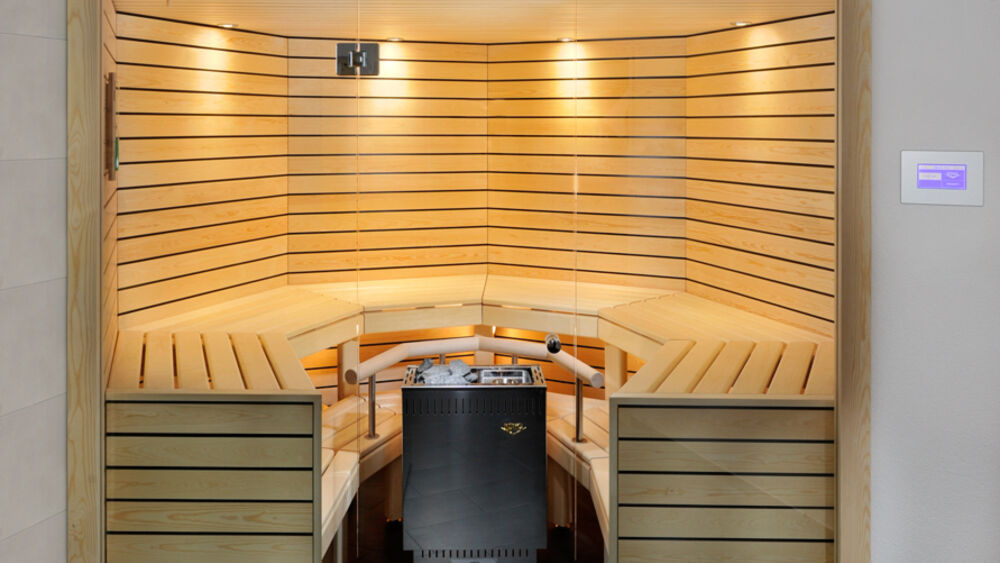
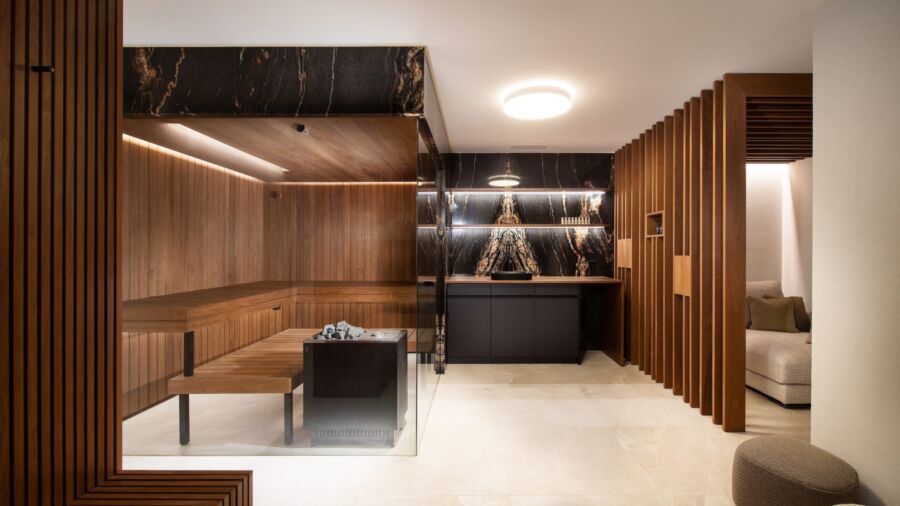
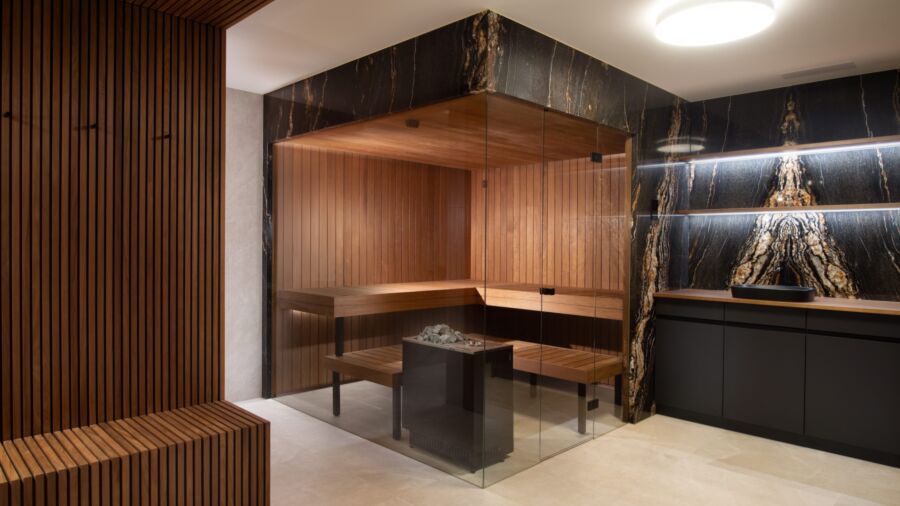
4. The one where wood meets stone or ceramic
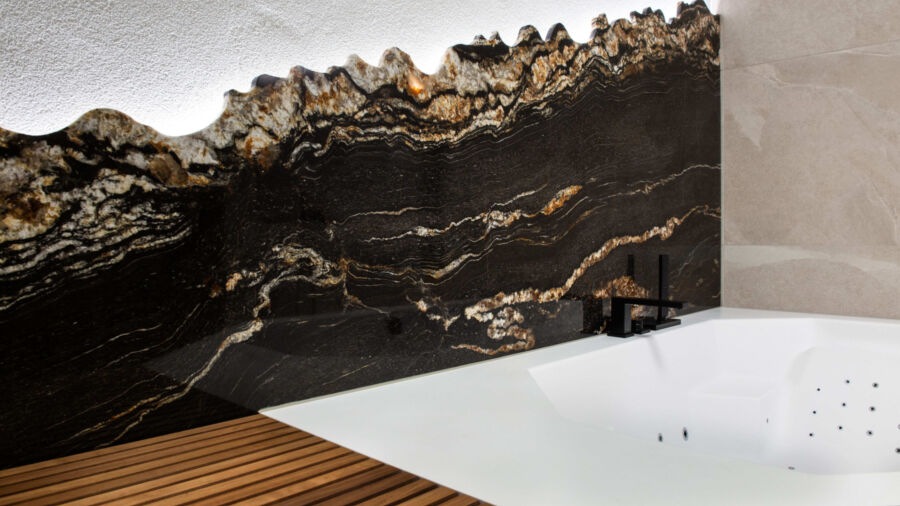
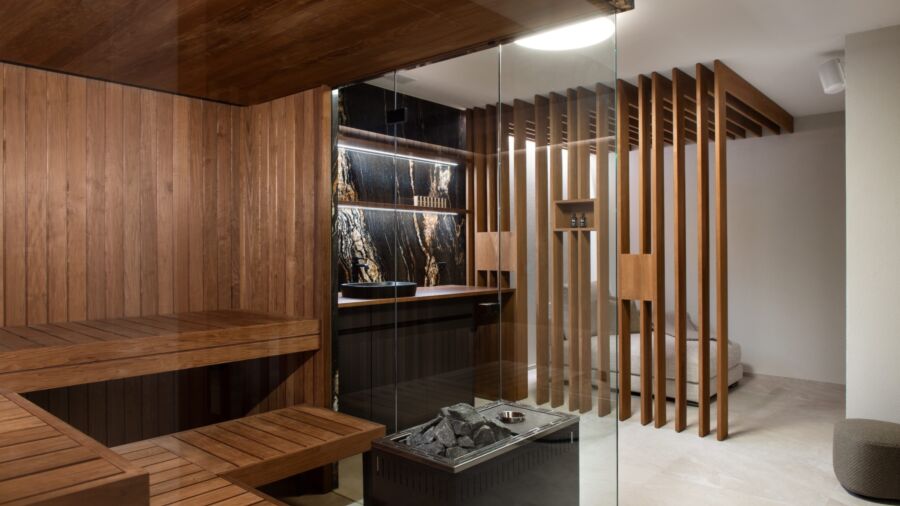
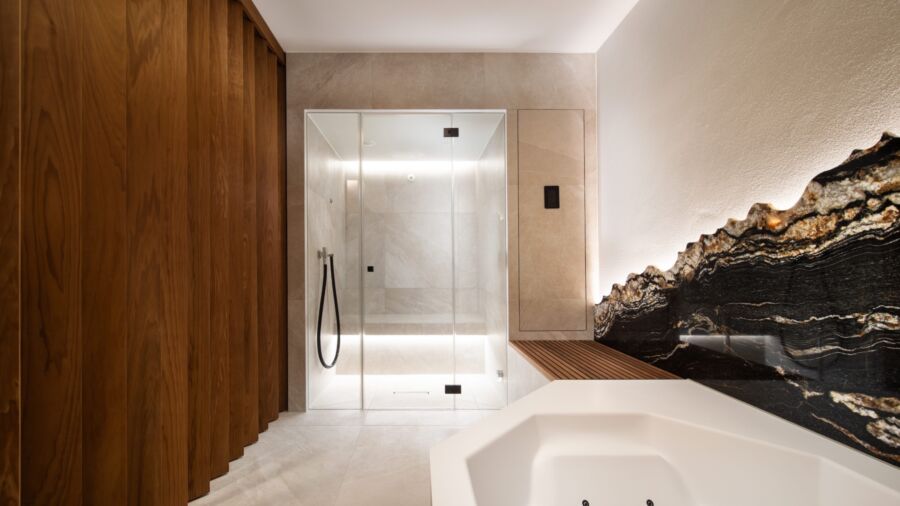
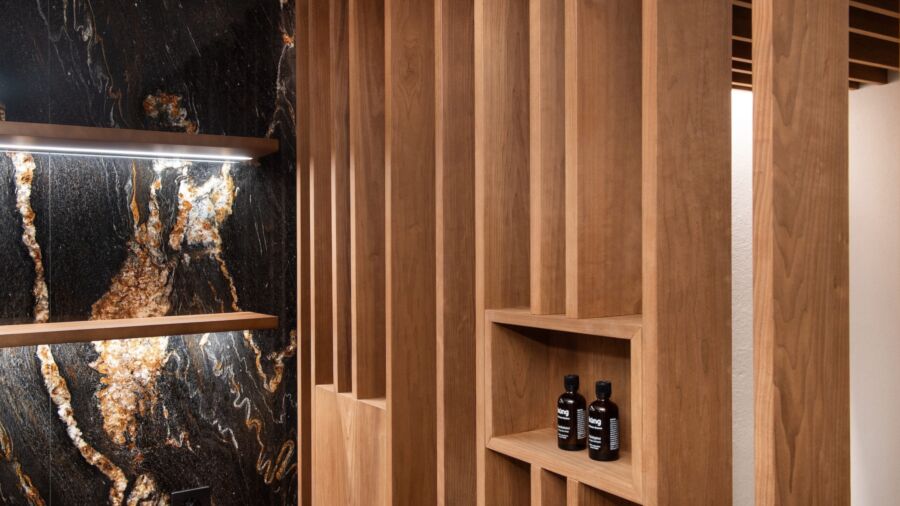
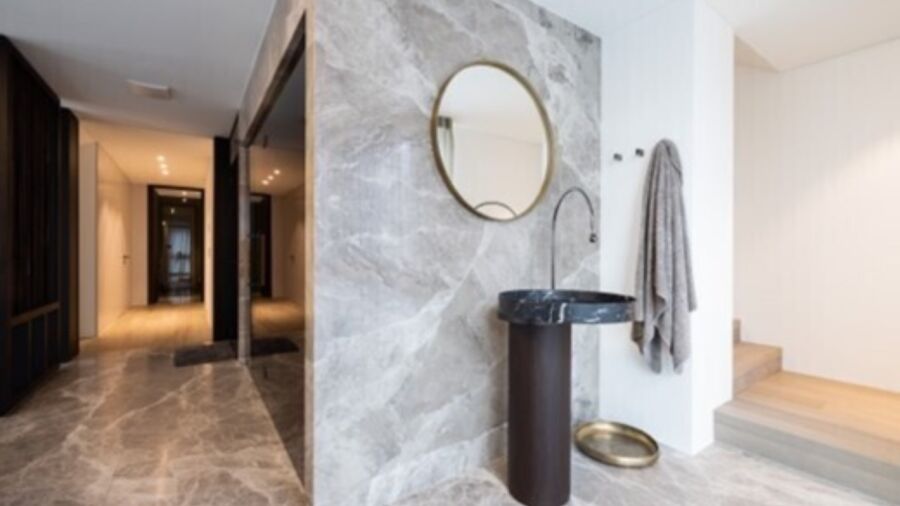
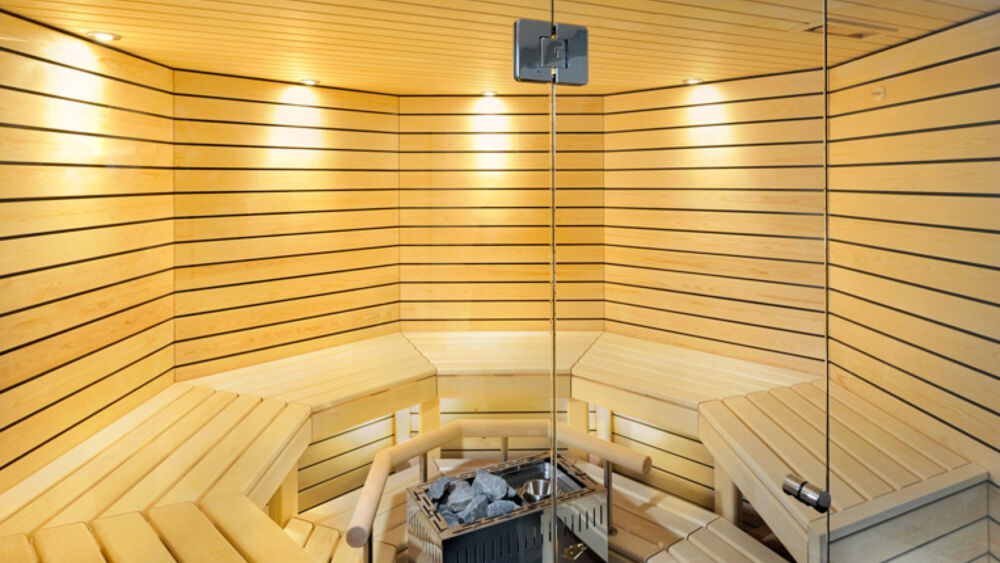
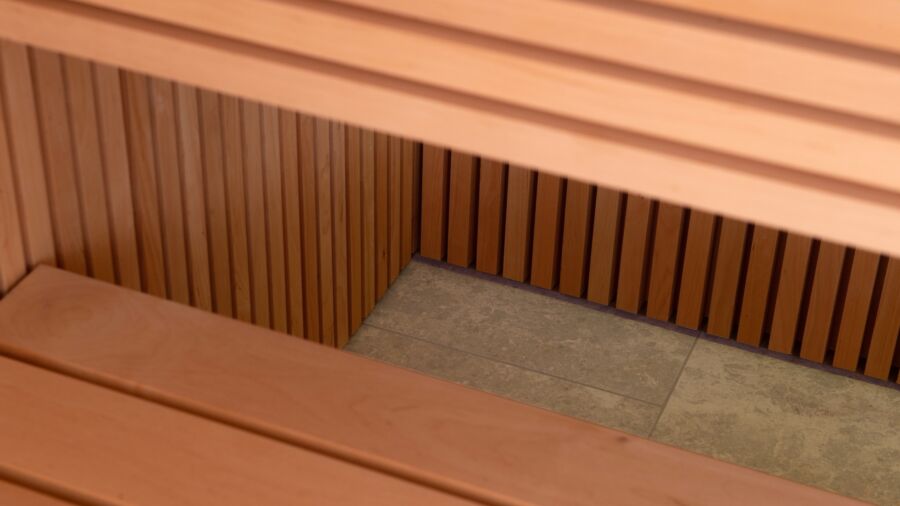
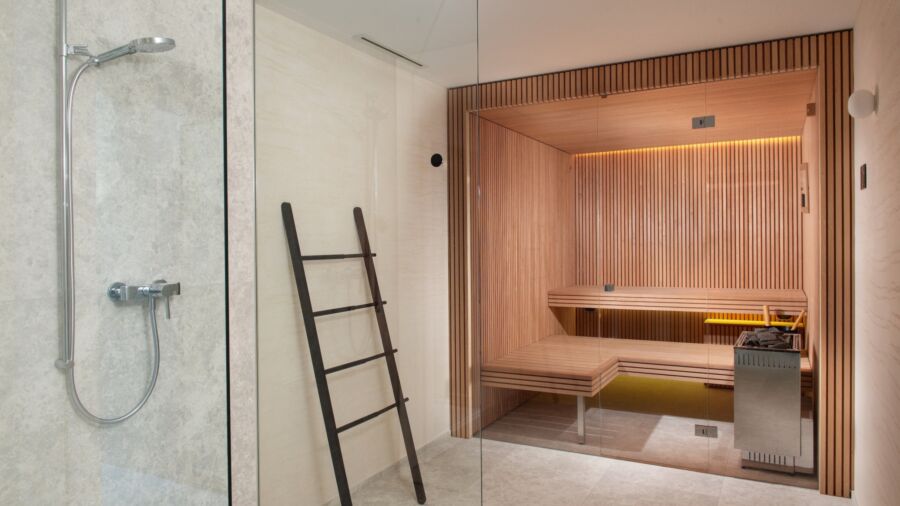
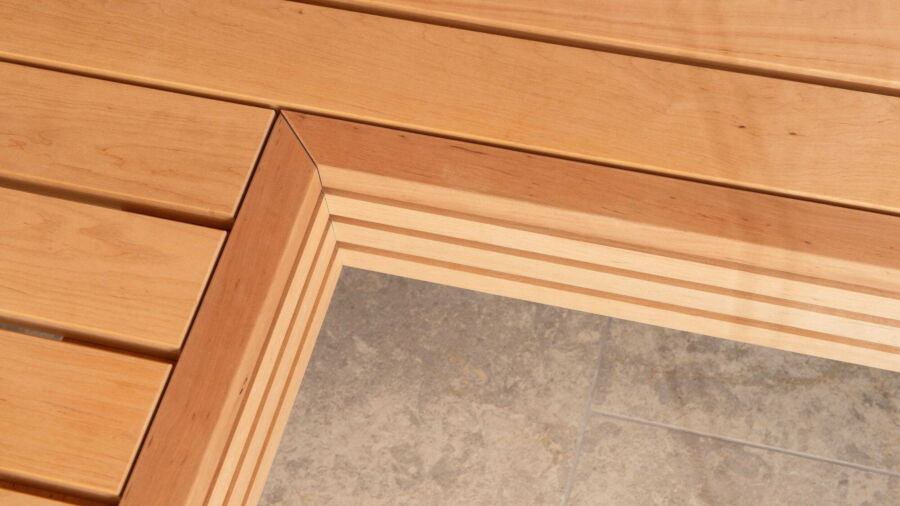
Wood provides warmth. Natural stone adds texture, depth, and an intriguing contrast to the space. Together, they create a material palette that feels both rustic and distinctly modern.
Whether used as a back wall, floor, frame, or expansive surface surrounding the sauna, stone can accentuate the warm tone of the wood, connect the sauna to the bathroom, or give it an almost monolithic appearance. Backlit natural stone is particularly striking, as the light reveals its grain. Discover the entire project: Discover the entire project: Private Spa in Ceramic and Wood
5. The Dark Beauty
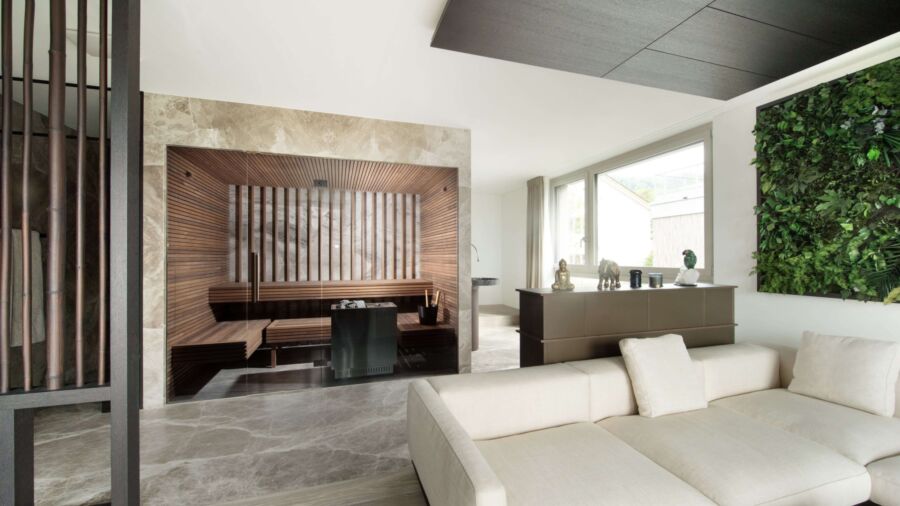
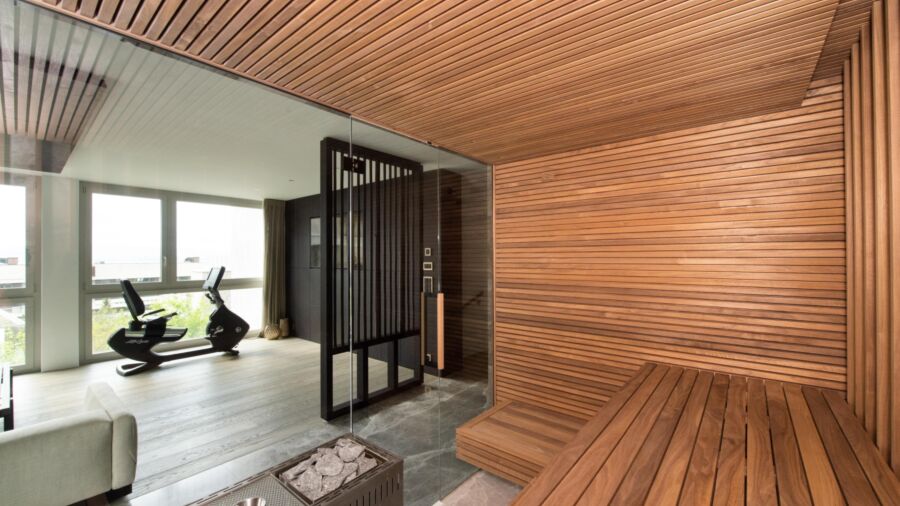
Dark woods, gray glass, black frames, and subtle lines of light create an elegant, almost mysterious atmosphere.
Especially in a minimalist interior, a dark sauna can appear like a precisely placed piece of furniture. Light becomes the defining design element here: it highlights the wood’s grain, makes the benches appear to float, and lends the space a sense of lightness despite the dark materials. Explore the entire project: Private wellness oasis with a 42 m² sauna