Types of Pools: A Comprehensive Overview
Having a private pool in the backyard is a dream for many homeowners. But when it comes to planning, the question quickly arises: Which pool types and materials are right for me? In this article, we’ll give you a detailed overview of the different pool types, their shapes, and the pros and cons of each material.
Comparing Pool Types: Which One Is Right for You?
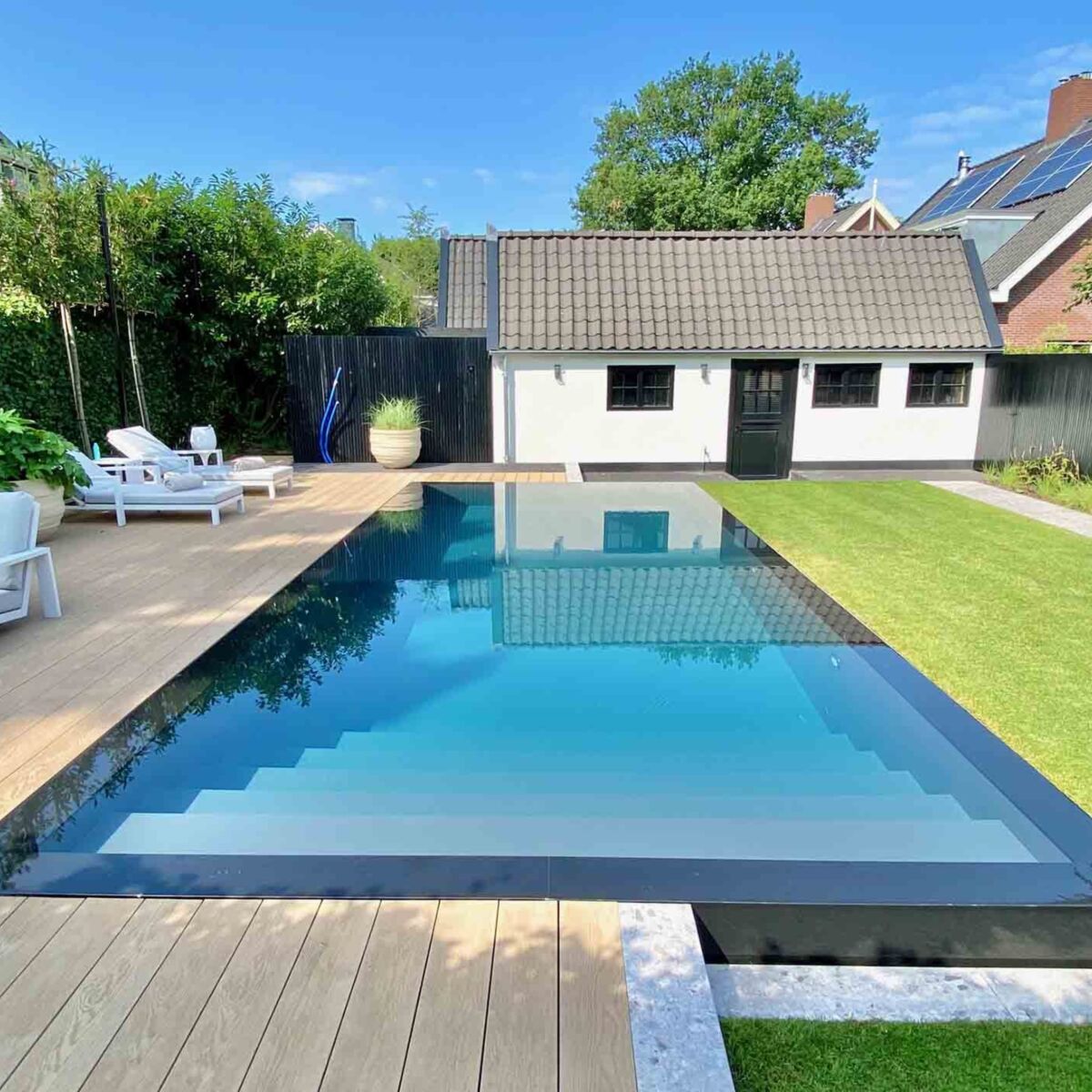
Choosing the right type of pool plays a crucial role in the long-term use and maintenance of your backyard pool. Each type of pool has its own advantages and challenges, depending on your individual needs, available space, and budget. While above-ground pools stand out for their flexibility and low cost, in-ground pools offer more customization and greater durability. The choice of materials, in particular, has a decisive impact on the pool’s durability, maintenance requirements, and your long-term enjoyment of it.
Einbaupools: Beständig und individuell
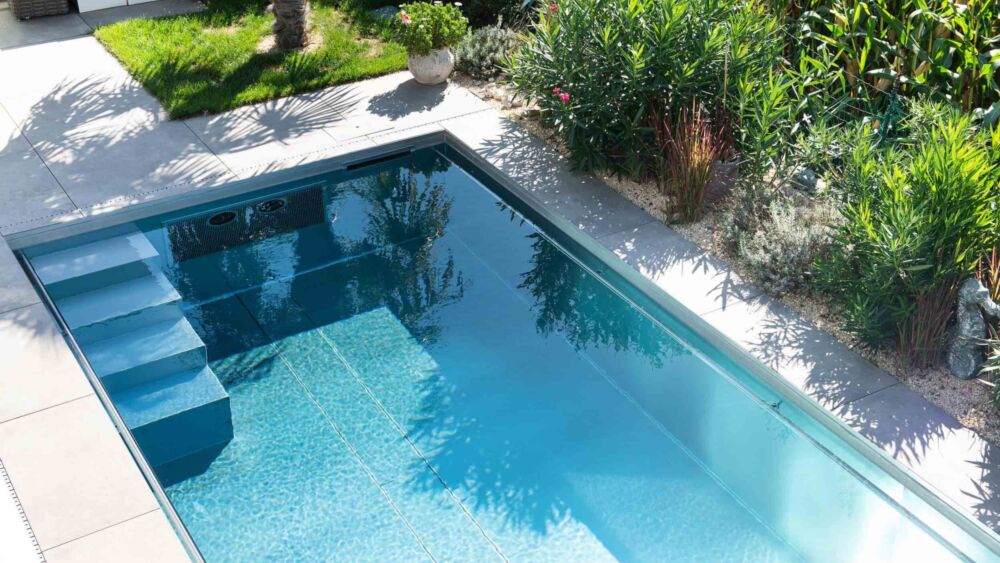
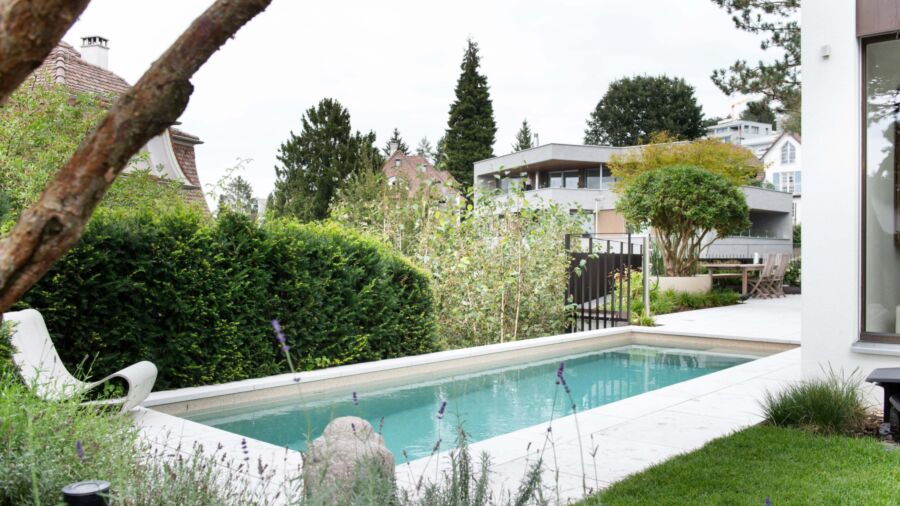
In-ground pools offer a stable, long-term solution and are permanently installed in the ground. They can be custom-designed and blend seamlessly into the garden. Compared to above-ground pools, they are significantly more durable, sturdy, and resilient. Although they require a higher initial investment, they offer significantly better quality and long-term use. In-ground pools not only enhance comfort but also increase the property’s value. They are the better choice for anyone who wants a high-quality, long-lasting pool.
Aufstellpools: Flexibel und kostengünstig
Above-ground pools offer a simple and cost-effective way to quickly set up a swimming pool in your backyard. They are flexible and can be taken down and set up again at a different location if needed. The bottom of the pool is usually lined with a plastic liner that keeps the water in the pool. However, above-ground pools have a shorter lifespan and are more susceptible to weather conditions. In addition, they often need to be taken down and protected during the winter, which is less practical in the long run. They’re also harder to integrate aesthetically into the garden, as they don’t blend seamlessly into the surroundings.
Pool Materials: An Overview of the Pros and Cons
Not all pools are the same—materials, durability, and maintenance requirements vary significantly depending on the type of pool. While some options stand out for their design flexibility, others excel in terms of exceptional durability or an elegant appearance. But which types of pools are best suited to your needs for your backyard? In our overview of pool types—pros and cons—we take a closer look at polypropylene pools, fiberglass prefab pools, concrete pools, and stainless steel pools, and show you what sets each option apart.
-
Concrete Pools: Custom, Sturdy, and Unique
A concrete pool is the perfect choice for anyone who values maximum design freedom. Whether rectangular, round, organically curved, or tailored entirely to your personal vision—concrete pools offer virtually unlimited possibilities in terms of shape and size. They are exceptionally sturdy and can easily handle even challenging conditions such as sloped sites or irregularly shaped lots. Thanks to their robust construction, concrete pools are considered a lifetime investment. They convey a sense of solidity and durability that is rarely found in other types of pools. While construction takes a bit longer and waterproofing with a pool liner—which should be replaced every 10 to 20 years—is necessary, in return you’ll receive a custom-designed pool that blends perfectly into your surroundings and will bring you joy for decades to come. A concrete pool is thus far more than just a swimming pool: it is a statement of durability, individuality, and quality. -
Stainless Steel Pool: Elegant and Hygienic
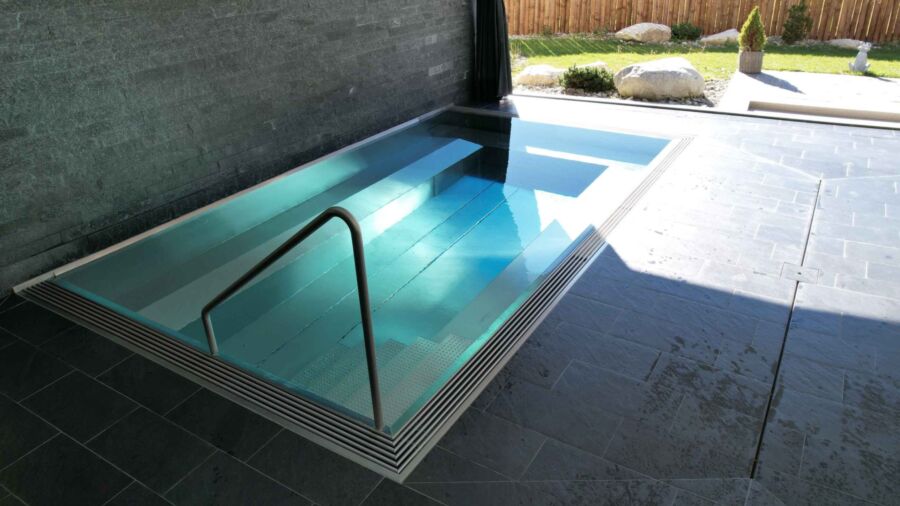
A stainless steel pool is the undisputed queen of swimming pools. It combines timeless elegance with state-of-the-art technology and is virtually unmatched in terms of hygiene, durability, and design. With its shiny, reflective surface, it’s a real eye-catcher and lends every garden a luxurious ambiance. Stainless steel pools are completely corrosion-resistant, frost-proof, and withstand wind and weather for decades—without losing any of their beauty. The smooth surface not only makes cleaning a breeze but also prevents dirt or bacteria from accumulating. As a result, stainless steel sets new standards in hygiene. Another advantage: Stainless steel pools are virtually maintenance-free and retain their elegant appearance over time. Even though the initial cost is higher, the investment pays off in the long run—because you’re getting a pool that will last for generations. In short: When you choose a stainless steel pool, you’re not just choosing a swimming pool—you’re choosing an exclusive lifestyle feature that perfectly combines elegance, health, and durability. -
Prefabricated Fiberglass Pools: Affordable, but with Limitations
Fiberglass-reinforced plastic (FRP) pools are a more cost-effective alternative to longer-lasting materials such as polypropylene or concrete. They are available as prefabricated pools in various standard sizes and shapes, which allows for quick installation. However, they are less durable than, for example, polypropylene pools in terms of resistance to UV rays and weathering, and generally have a shorter lifespan. The design options for GRP pools are also more limited compared to other types. -
Polypropylene Pools: Sturdy and Durable
Polypropylene pools (PP pools) are among the most durable types of pools. They are UV-resistant, frost-proof, and resistant to chemical exposure—which guarantees an exceptionally long service life. Thanks to their smooth surface, neither algae nor dirt can accumulate, which makes cleaning much easier. In addition, PP pools offer excellent thermal insulation, which reduces energy consumption for heating. To clearly illustrate the most important features, here is a brief overview:

Schedule a consultation now
Not sure which pool is right for you, or would you like specific advice? Schedule a no-obligation consultation, and we'll be happy to help.
Laurent Salon
Consulting + Sales
Pool Shapes: Aesthetics Meets Functionality
Choosing the right pool shape is crucial, not only for its appearance but also for its functionality and how well it integrates into your garden. Depending on the type of pool, the shape can significantly influence the overall look of your outdoor space and help the pool blend seamlessly into the existing landscape. Here are some of the most popular pool shapes:
- Rectangular pools: The classic pool shape, characterized by its clean lines and functionality. It’s particularly well-suited for competitive swimming, as the straight edges allow for longer laps, making the pool more practical. Rectangular pools blend seamlessly into modern gardens or minimalist designs and also offer the advantage of being ideal for the installation of counter-current systems or other swimming aids.
- Round pools: Round pools have a particularly inviting and sociable feel. They’re ideal for families and small garden spaces, as they’re space-saving and blend harmoniously into smaller gardens or corners. Their round shape fosters a relaxing atmosphere and is ideal for socializing with friends and family. These pools usually have no sharp corners, making them a safe choice for families with small children.
- Free-form pools: These pools offer the greatest design flexibility and adapt perfectly to the natural features of your garden. With organic, curved shapes, free-form pools can create a particularly natural aesthetic. They blend harmoniously into the garden landscape and offer plenty of room for creative designs. These pools can be customized, whether through asymmetrical shapes or by incorporating waterfalls and other decorative elements.

Types of Pools for Your Garden: Making the Right Choice for Your Dream Pool
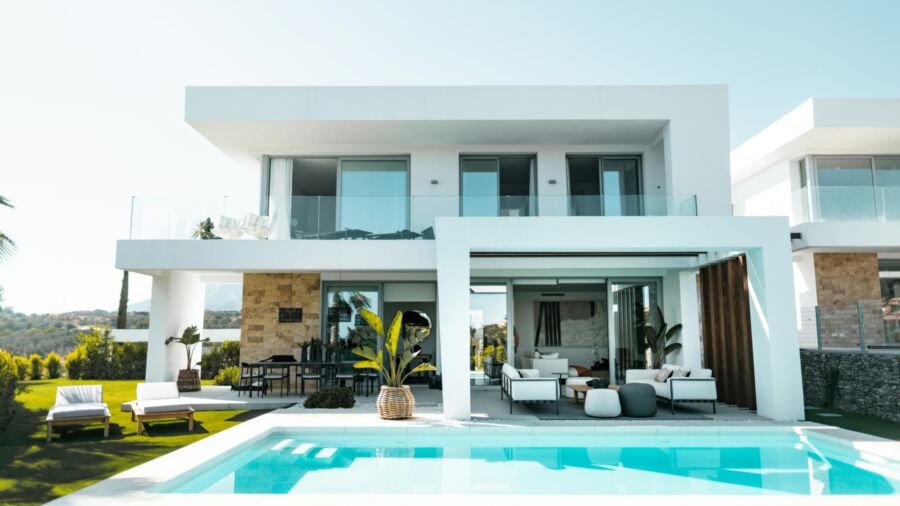
Choosing the right type of pool and the appropriate pool material depends on your individual needs, your available budget, and the conditions of your yard. When deciding on the right swimming pool, it’s not just the size and type of pool that matter, but also the ground conditions and the construction method. Whether you’re planning a pool for exercise, a pool for family fun, or a pool as part of a wellness oasis—each concept comes with its own set of requirements. While some pool types, such as concrete pools, stand out for their stability and durability, others, like above-ground pools, require less effort and offer greater flexibility.
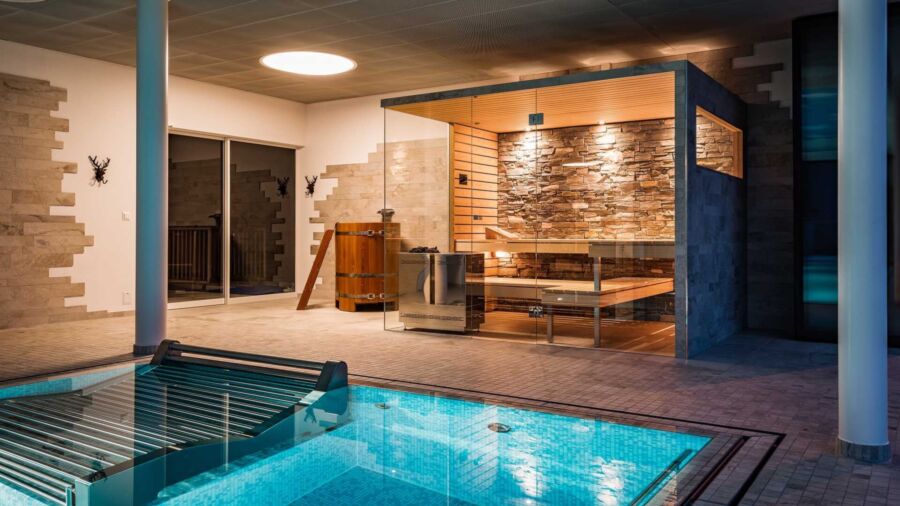
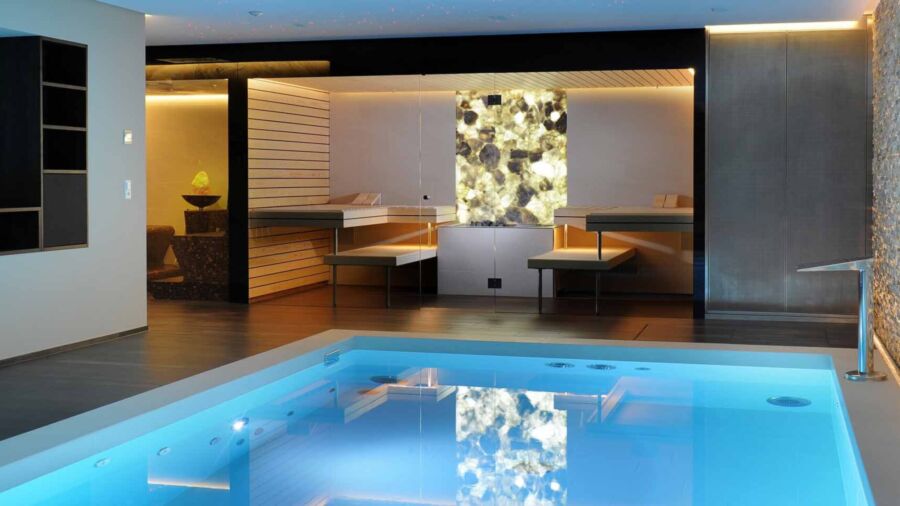
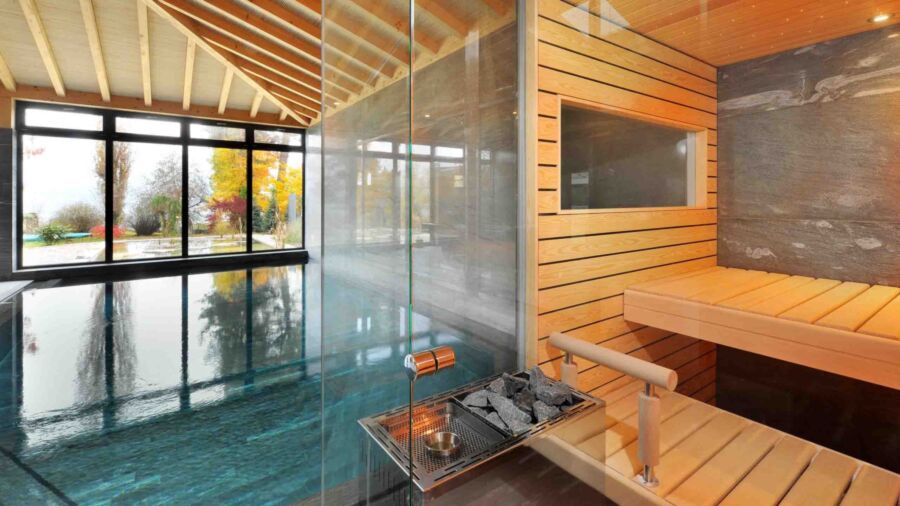
Installing a pool must be carefully planned, especially if it’s to be built into the ground. Thoroughly weighing the pros and cons of the various pool types and materials is crucial to ensuring you’ll enjoy your own swimming pool for years to come. If, in addition to purchasing a swimming pool, you ’re also considering a high-quality hot tub or are interested in building a sauna in Switzerland, you’ll find the right solution for your wellness oasis with us.